
Tiny patients, big breakthroughs.
By Rob Clancy, staff writer. Reviewed by Associate Professor Courtney McDonald

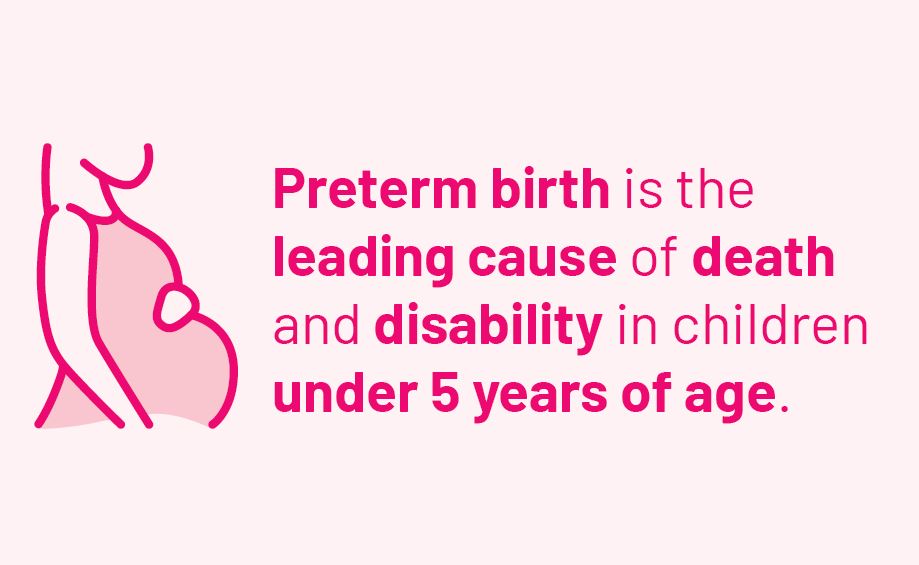
Every baby deserves the chance to thrive. But for one in ten born too soon, that chance is often stolen before they take their first breath.
New research from Hudson Institute of Medical Research has uncovered a silent threat to preterm babies: inflammation in the womb that doesn’t just strike once—it lingers, causing lasting damage to the developing brain. For the first time, scientists have confirmed that this inflammation persists for months after birth, continuing to harm fragile neural tissue long after the initial exposure.
This breakthrough, led by PhD student Dr Abdul Razak and supervised by Associate Professor Courtney McDonald, reveals a critical window for intervention—and a powerful opportunity for hope.
Preterm birth and brain injury
A/Prof McDonald said previous human studies suggested that ongoing inflammation could be detected in the blood: “But this is the first time we have shown in a preclinical model that closely mimics human brain development that the brain itself also has ongoing inflammation,” she said.
The science behind the discovery
Previous research had clearly identified primary inflammation – the body’s initial response to a particular stress – and secondary inflammation, which occurs in the days and weeks after the original injury.

A/Prof McDonald and her team identified “tertiary inflammation”: a third wave of immune activation that continues well beyond the initial insult. This persistent inflammation damages white matter, disrupts myelination (the process where a protective sheath wraps around nerves, allowing electrical impulses to travel faster and more efficiently), and destroys support cells essential for healthy brain function. These changes mirror those seen in lifelong conditions like cerebral palsy and other neurodevelopmental disorders.
Until now, therapies have focused on the immediate aftermath of preterm birth. But this research opens the door to delayed treatments—ones that could be administered weeks or months later, when the damage is still unfolding.
“These findings will enable the testing of delayed therapies for brain injury that show up months after preterm birth and will help researchers explore long-term behavioural deficits after preterm inflammation.”
“This research provides a clinically relevant model to test therapies that could prevent or reduce this injury, with the goal of improving long-term outcomes for these babies,” Dr Razak said.
There are currently no therapies that target inflammation-induced brain injury in the womb. However, with continued research, we can move beyond understanding the damage to developing real treatments—giving preterm babies not just survival, but the chance to thrive.

In this issue of Hudson News Summer 2025


This research was supported by | Inner Wheel Australia, MRFF, Monash University, Australian Lions Cord Blood Foundation & The Royal Australian College of Physicians
Journal | Experimental Neurology
Title | Persistent inflammation and white matter damage in the preterm brain: Insights from a novel ovine model of chronic inflammation
View publication | https://doi.org/10.1016/j.expneurol.2025.115397
In this article


About Hudson Institute
Hudson Institute’ s research programs deliver in three areas of medical need – inflammation, cancer, women’s and newborn health. More

Hudson News
Get the inside view on discoveries and patient stories
“Thank you Hudson Institute researchers. Your work brings such hope to all women with ovarian cancer knowing that potentially women in the future won't have to go through what we have!”
