
Treatment type: Immunotherapies
-
Could gut bacteria be harnessed to fight cancer?
The gut microbiome, the vast ecosystem of bacteria that live within our digestive system, is becoming increasingly recognised for its essential role in supporting our physical and mental health.… Read more

-
Harnessing immune therapies to combat pancreatic cancer
Investigating the role of the immune system in the fight against pancreatic cancer is the focus of innovative research at Hudson Institute, thanks to new funding announced on World Pancreatic Cancer Day.… Read more

-
Emerging influenza research leader
Emerging leader in viral pathogenesis and immunology, Dr Michelle Tate has received a promotion to lead her own research group. Dr Tate’s research group, ‘Viral immunity and immunopathology’ will focus on the understanding the induction of hyperinflammation during an influenza virus infection. “My research aims to better understand the mechanisms that contribute to the induction… Read more

-
‘Missing link’ explains how viruses trigger immunity
A discovery by Melbourne researchers has solved a longstanding mystery of how viruses trigger protective immunity within our body. The research team demonstrated a protein called SIDT2 was crucial for cells to detect viral components in their environment, and initiate an immune response to reduce the virus’ spread. As well as being an important part… Read more

-
Promising new treatment for incurable premature lung disease
Hudson Institute researchers have discovered a potential safe and effective treatment for bronchopulmonary dysplasia (BPD), which could save preterm babies from the severe lifelong effects of this incurable premature lung disease.… Read more

-
Protein found in female reproductive tract could halt HIV spread
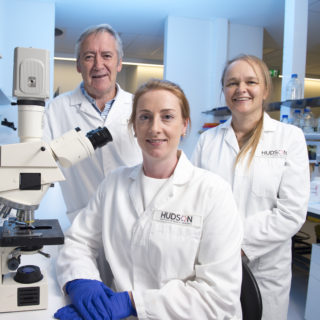
Scientists from Hudson Institute of Medical Research and Deakin University have shown that a naturally occurring signalling protein found in the female reproductive tract, interferon epsilon, can block the replication of human immunodeficiency virus (HIV) in human cells, and could form a first-line response to the virus.… Read more
-
WWI antiseptic could fight 21st century viral infections
Melbourne researchers have shown that a century-old topical antiseptic used to treat wounds and ‘sleeping sickness’ in Australian soldiers in World War One could activate the immune system to protect against viral infection, and may prove key in the fight against antibiotic resistance.… Read more

-
Researchers identify key driver of devastating muscle wasting disease affecting cancer patients
Lung cancer is the leading cause of cancer death worldwide, and is frequently associated with cachexia. Cachexia is a devastating syndrome of weight and muscle wasting, affecting as many as 80 per cent of advanced cancer patients.… Read more

-
Breakthrough heralds hope for advanced bladder cancer patients
Researchers at Hudson Institute of Medical Research have discovered a crucial genetic marker that heralds better treatment and outcomes for patients with advanced bladder cancer.… Read more

-
Researchers identify protein to prevent damage to donated vital organs
Melbourne researchers have identified a protein (follistatin) that could prevent damage to donated organs before and after transplantation, and potentially stop the body rejecting the… Read more