
Solving a mysterious inflammatory fever opens the book on a much bigger story
By Rob Clancy, staff writer. Reviewed by Dr Shouya Feng
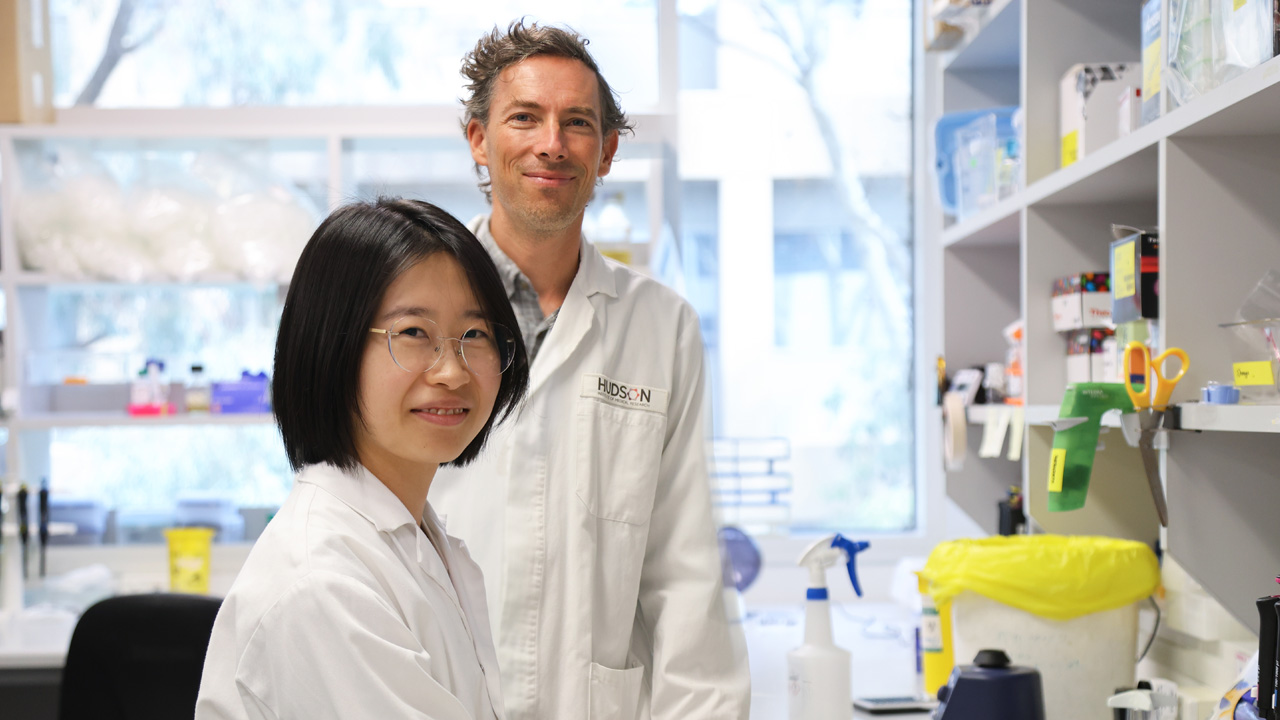
Three research teams working independently around the world have landed on the same discovery: a single molecular “handshake” inside our cells controls a family of inflammatory diseases, including one of the most common inherited fevers on Earth.
Summary
- A team from Hudson Institute of Medical Research, Monash University and Monash Health, with collaborators in South Korea and the USA, have found that mutations in a single gene called CDC42 are responsible for a newly identified condition that resembles FMF.
- This finding led to the use of an existing anti-inflammatory drug, anakinra, which was effective in controlling the symptoms of this disease.
- At the same time, other international research teams identified a different genetic change in CDC42 causing the same condition and showed that FMF variants bind CDC42 more tightly — confirming that one interaction between two proteins is a master switch for a spectrum of inflammatory diseases.
The finding solved a decades-old puzzle for one family and led to a treatment that worked almost immediately.
It all revolves around Familial Mediterranean Fever (FMF), the most common inherited autoinflammatory disease, which affects an estimated 1-2 in every 1,000 people in high-prevalence populations, including those of Mediterranean, Middle Eastern, Armenian and Jewish ancestry. FMF begins in childhood, causing recurring fevers, painful rashes and joint pain.
For over 20 years, one family lived with a mysterious illness that resembled FMF, but nothing doctors tried would cure it.
Researchers at Hudson Institute of Medical Research and clinicians at Monash Health, working with collaborators in South Korea and the USA, have now found out why, and it all comes down to a mutation in a single gene called CDC42, which changes the characteristics of the protein that gene produces.
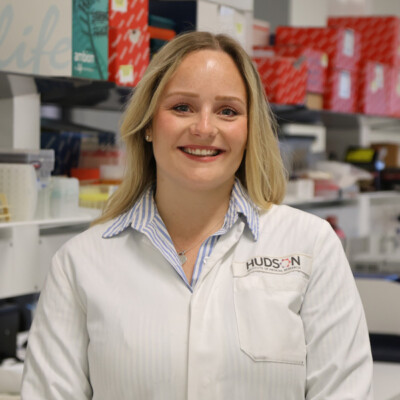
Their research has been published in the esteemed journal Science Immunology, and first author, Dr Shouya Feng, explains how this tiny genetic change, passed down through three generations of the family, was the culprit.
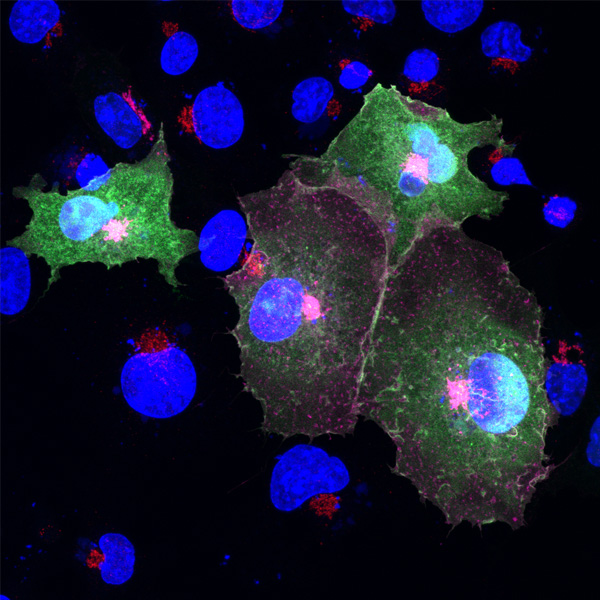
A protein that won’t let go
“CDC42 normally gives a brief “handshake” to another protein, pyrin, which acts like a smoke detector for the immune system. In this family, the genetic change makes CDC42 grip pyrin too tightly — like holding the smoke detector’s test button down — so it fires the alarm far more often than it should, causing fever, pain and rash,” Dr Feng said.
Because the researchers could see exactly which alarm was stuck on, doctors knew what to do: they treated the family with anakinra, a drug that blocks the specific inflammatory signal involved. Symptoms that had lasted decades came under control almost immediately.
“This family had lived for years with an illness nobody could explain or effectively treat. Once we understood exactly which alarm system had gone wrong, the right treatment was obvious — and it worked almost straight away,” said Professor Seth Masters, senior author of the study and researcher at Hudson Institute and Monash University.
Three teams, one answer
While preparing to publish their results, the team learned of other, unrelated patients who had a different genetic change in CDC42 causing the same symptoms — a sign this is a new category of related diseases that doctors can now recognise and treat.
Their discovery is now published alongside two independent studies that arrived at the same underlying mechanism from different directions.
In one of these, teams based at Japan’s Kyoto University and France’s Université Paris Cité found that six patients, from three unrelated families, had a different disease-causing change in CDC42, which caused it to grip pyrin too tightly— and again, patients responded well to treatment with anakinra.
Another team at Kyoto University and Tohoku University in Japan tested hundreds of variations in the pyrin gene itself and found that the classic mutations behind FMF work the same way, by causing pyrin to grip CDC42 too tightly.
Together, these three studies — involving researchers from Australia, Japan, France, South Korea, and the USA — show that this one interaction between two proteins is a master switch for a whole spectrum of inflammatory disease: at one end, an ailment (FMF) as old as the plague and still common today; at the other, a disease identified for the very first time, in multiple families.
“It’s exciting to see three independent research teams from opposite sides of the world arrive at the same molecular explanation at the same time. That gives us strong confidence that we’ve uncovered a fundamental mechanism behind these inflammatory diseases,” said Dr Feng.
Old disease, new discoveries
Familial Mediterranean Fever (FMF) is thought to be thousands of years old.
Scientists believe the same genetic changes that cause FMF also once protected ancient populations around the Mediterranean from the plague, which is likely why the condition remains common today, especially in people of Middle Eastern, Mediterranean, Armenian and Jewish ancestry.
The newly identified CDC42 disease is the opposite: it’s not ancient or widespread, and this is the first time it has been characterised in the medical literature. Remarkably, not only does this new condition have a suitable treatment, but it also appears to share the same disease-causing pathway as FMF, revealing an unexpected biological link between two conditions separated by thousands of years of history.
Familial Mediterranean Fever (FMF) – an overview
- What it is: A rare genetic condition that causes recurring, unpredictable episodes of painful inflammation—most commonly fever accompanied by severe abdominal, chest or joint pain.
- Who it affects: While found worldwide, it is most common in people of Mediterranean, Middle Eastern, and North African heritage (such as Sephardic Jewish, Armenian, Turkish, and Arab populations).
- What causes it: Inherited mutations in the MEFV gene (which encodes the protein pyrin), that disrupt the body’s ability to regulate inflammation, causing the immune system to misfire and attack healthy tissues.
- Treatments available: A daily oral medication called colchicine is the primary treatment for FMF, helping to prevent painful flare-ups and protect against long-term kidney damage. For people who do not respond adequately to colchicine, other anti-inflammatory treatments, including the biologic medicine anakinra, may also be used.
- What this study adds: The findings suggest that FMF may be part of a broader family of inflammatory diseases that arise through a shared underlying disease mechanism, even when they are caused by different genetic changes.
About Hudson Institute’s Innate Immune and Autoinflammatory Disease research
Auto-inflammatory diseases can present anytime from very early in life with severe systemic symptoms such as fevers, swelling, redness and pain.
Diagnosis is typically delayed, requiring extensive investigations to rule out other conditions.
Professor Seth Masters and his team in the Innate Immune and Autoinflammatory Disease Research group manage the Australian Autoinflammatory Disease Registry, which aims to increase the rates of genetic diagnosis and gain insights into novel mechanisms for therapeutic development.
The group’s research aims to identify new forms of auto-inflammatory diseases, and exploring ways to target innate immune pathways to address inflammation associated with chronic and neurodegenerative conditions.
Collaborators | Wonyong Lee (Center for Viral Immunology, Institute for Basic Science (IBS), Daejeon, Republic of Korea) ~ William D. Renton (Paediatric Rheumatology, Monash Children's Hospital; Paediatric Rheumatology, The Royal Children's Hospital; Department of Paediatrics, Monash University, Melbourne, Victoria, Australia) ~ Samar Ojaimi (Faculty of Medicine, Nursing and Health Sciences, Monash University, Melbourne, Victoria, Australia.) ~ Tim C. Hewitt & T. Daniel Andrews (Division of Immunology and Infectious Diseases, John Curtin School of Medical Research, Australian National University, Canberra, Australian Capital Territory, Australia.) ~ Peter J. Steinbach (Bioinformatics and Computational Biosciences Branch, National Institute of Allergy and Infectious Diseases, National Institutes of Health, Bethesda, Maryland, United States of America.) ~ Daniel L. Kastner & Jae Jin Chae (Inflammatory Disease Section, National Human Genome Research Institute, National Institutes of Health, Bethesda, Maryland, United States of America) ~ Jérôme Delon (Université Paris Cité, CNRS, Inserm, Institut Cochin, Paris, France) ~ Takahiro Yasumi (Department of Pediatrics, Kyoto University Graduate School of Medicine, Kyoto, Japan)
This research was supported by | This work was supported by the NHMRC GNT2008699 and GNT2035298 (to Seth L. Masters), the Jack Brockhoff Foundation grant number 5252 (to Shouya Feng), the Institute for Basic Science (IBS), Korea, under project code IBS-R801-D2 (to Wonyong Lee), the Office of Science Management and Operations (OSMO) of the NIAID, NIH (to Peter J. Steinbach).
Journal | Science Immunology
Title | An autoinflammatory CDC42 variant M45L demonstrates the mechanism of pyrin inflammasome activation
View publication | https://doi.org/10.1126/sciimmunol.adz8733
In this article


About Hudson Institute
Hudson Institute’ s research programs deliver in three areas of medical need – inflammation, cancer, women’s and newborn health. More

Hudson News
Get the inside view on discoveries and patient stories
“Thank you Hudson Institute researchers. Your work brings such hope to all women with ovarian cancer knowing that potentially women in the future won't have to go through what we have!”