
Stopping a common stomach infection causing cancer
By Rob Clancy, staff writer. Reviewed by Professor Richard Ferrero

Roughly half the world’s population is infected with the stomach bacterium Helicobacter pylori, which is responsible for around 90 per cent of gastric cancers.
Key Points
- The common stomach bacterium Helicobacter pylori is responsible for around 90 per cent of gastric cancers.
- New research builds on knowledge that the immune protein NLRC5 protects against the development of stomach lymphoma.
- A lack of NLRC5 increases the presence of two important signalling molecules, AXL and MERTK, creating conditions favouring tumour formation.
- Existing drugs that block the actions of these proteins could be a new option for the treatment of stomach lymphoma.
However, until now, mystery has surrounded the question of why some H. pylori infections lead to a rare form of lymphoma in the stomach and others don’t.
H. pylori specialists at Hudson Institute of Medical Research have now identified changes in immune responses that lead to the development of stomach lymphoma, with their findings published in The FASEB Journal.
Immune protein controls stomach lymphoma formation
Professor Richard Ferrero said a crucial factor is that particular immune cells, known as macrophages, which don’t have the immune protein NLRC5 are no longer able to control tumour development.
“We have shown in cell culture models that macrophages lacking NLRC5 have increased levels of two important signalling molecules, AXL and MERTK, involved in a range of cancers but not previously associated with stomach lymphoma,” Prof Ferrero said.
“This upregulation of these proteins in host cells has been shown to create the immunological conditions favouring tumour formation.”
The findings are significant because they identify AXL and MERTK as potential targets for the treatment of stomach lymphoma to H. pylori infection.
Drugs have already been developed to block the actions of these proteins, which potentially makes them a new option for the treatment of stomach lymphoma.
Preventing stomach infection developing into cancer
PhD Student Shambel Haile was first author on this paper, and he believes its impact could be in identifying therapeutic targets to prevent the progression from stomach lymphoma to more severe forms.
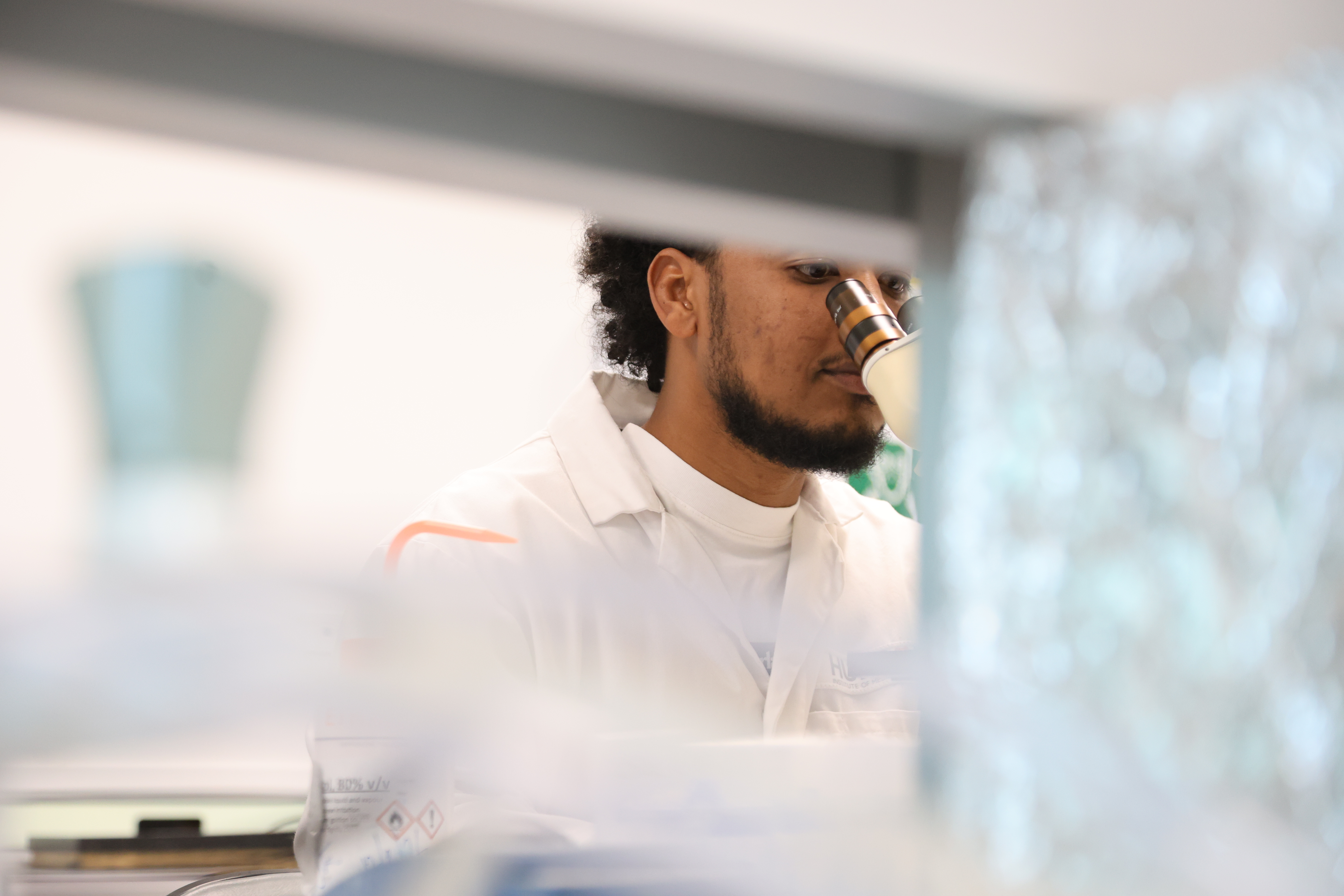
“Chronic H. pylori infection can lead to a rare form of stomach lymphoma, known as MALT lymphoma, but when it’s treated early, this infection can be cleared up using antibiotics,” he said.
“But more treatment options are needed when antibiotics fail and the disease progresses.”
“When it’s caught early, the ten-year survival rate for MALT lymphoma is over 90 per cent, but once the disease is advanced, the survival rate is less than half that, so it is clear that treatments which catch this cancer early could make a huge difference.”
Prof Ferrero agrees, adding: “There is an important clinical need to develop new therapies to be used individually or in conjunction with current treatments.”
“Our latest research provides new insights into this problem, opening the possibility that existing drugs could be re-purposed, saving time and potentially saving lives.”
About H. pylori and MALT lymphoma
- pylori infects around half the world’s population, although most people never develop serious disease.
- pylori bacteria can colonise the stomach and may cause inflammation and ulcers in the stomach lining.
- Long-term pylori infection can increase the risk of stomach cancer.
- Most cases of stomach MALT lymphoma are caused by pylori.
- Early-stage stomach MALT lymphoma can often be treated with antibiotics, but more advanced disease may require additional treatments, including chemotherapy.
Collaborators | Monash University ~ Università di Pisa, Pisa, Italy ~ University of Toronto, Toronto, Ontario, Canada ~ University of Hohenheim, Stuttgart, Germany
This research was supported by | National Health and Medical Research Council (NHMRC): Project Grant APP1107930; Ideas Grant APP2012620; Senior Research Fellowship APP1079904 ~ US Department of Defense: Award W81XWH-17-1-0606 ~ Tour de Cure: RSP-330-2020 ~ Victorian State Government’s operational fund
Journal | FASEB Journal
Title | NLRC5-Deficient Macrophages Promote a Tumor-Permissive Phenotype via AXL- and MERTK-Mediated Efferocytosis
View publication | https://pmc.ncbi.nlm.nih.gov/articles/PMC13428295/

In this article

About Hudson Institute
Hudson Institute’ s research programs deliver in three areas of medical need – inflammation, cancer, women’s and newborn health. More

Hudson News
Get the inside view on discoveries and patient stories
“Thank you Hudson Institute researchers. Your work brings such hope to all women with ovarian cancer knowing that potentially women in the future won't have to go through what we have!”
