Will AI uncover our next medical miracle?
By Rob Clancy, staff writer. Reviewed by Professor Philip Bardin
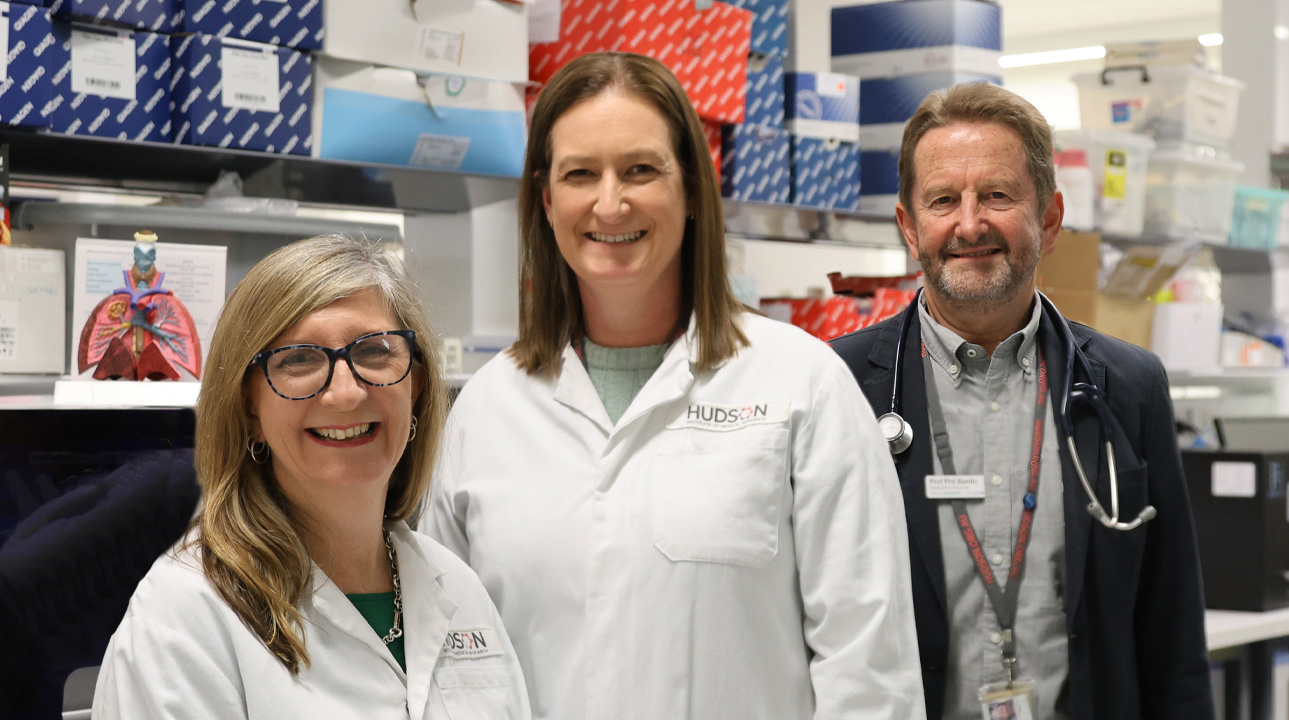
Could artificial intelligence (AI) hold the key to the next great medical breakthroughs? After discovering a better way of treating a common, debilitating lung condition with a registered medication “hiding in plain sight”, a team of Melbourne scientists believe it could.
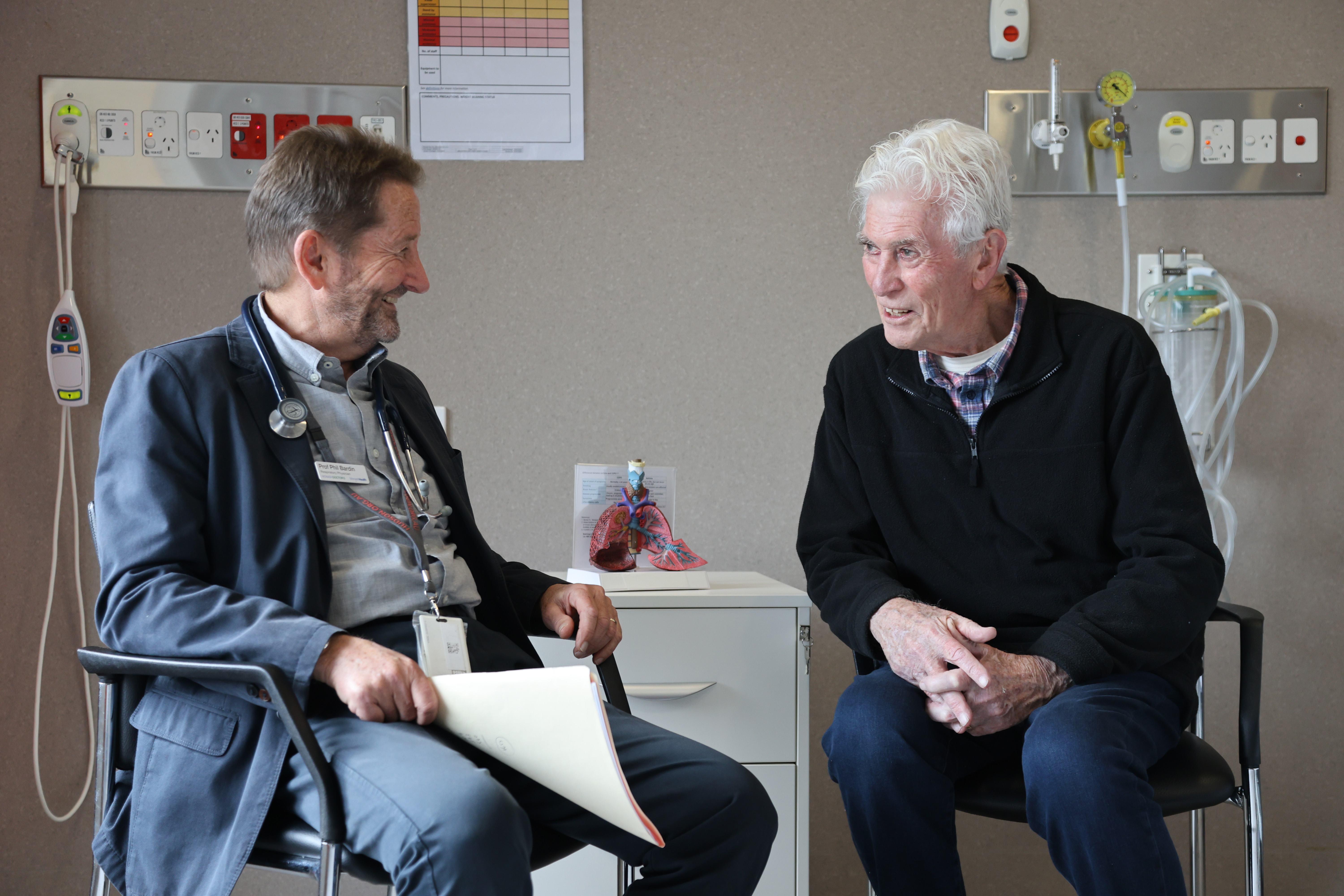
Respiratory physician Professor Philip Bardin and his team at Hudson Institute of Medical Research recently identified that a commonly used treatment for lung fibrosis can be used to great effect in treating Chronic Obstructive Pulmonary Disease (COPD), avoiding many drawbacks of current treatments.
Prof Bardin, the Professor of Respiratory Medicine and Emeritus Director, Monash Lung Sleep Allergy & Immunology, says hundreds of current drugs could have benefits beyond their original uses, and AI is the perfect tool to identify them.
His team has published a commentary in the prestigious journal Lancet Respiratory Medicine suggesting that the ability of AI algorithms to sift rapidly through biological pathways, disease pathologies, clinical trial results, patient records and genetic data could be a game-changer.
Working alongside Dr Belinda Thomas and Professor Jane Bourke at Hudson Institute and Monash Health, and the Monash Biomedicine Discovery Institute, the team established that treating COPD with pirfenidone instead of steroids reduced disease severity, lowering both virus replication and airway inflammation without reducing the immune response, which is what steroids do.
The team believes this is just one example of a commonly used drug that has shown benefits way beyond its original purpose.
“Repurposing aspirin for alternative medical conditions has been a success story. Initially used for pain relief, basic research showed its effect on platelet function and blood clotting, and since then it has had great success in reducing coronary events,” they wrote.
“AI can review physical and chemical properties of millions of compounds with the potential to independently perform the complex process of drug repurposing, albeit with final human oversight,” they said. “Large online databases contain details of more than 100 million compounds and more than 300 million biomolecular targets.”
“They can potentially be used to match known pathologies with candidate compounds. The development of AI methods using natural language processing is a powerful way to extract unstructured data to include scientific publications, case reports, clinical trials, and electronic medical records in databases.”
While admitting that the concept has its challenges, they ask the question: “How many other cures are hiding in plain sight?”
“There has never been a systematic way of integrating a mountain of disease pathologies and existing drug information; AI now provides a tool that can connect these domains.”
The future of drug discovery might not only lie in novel molecules, but in new applications of old ones.”
Collaborators | Monash Health, and the Monash Biomedicine Discovery Institute
Journal | Lancet Respiratory Medicine
Title | AI as a tool to repurpose existing compounds for respiratory indications
View publication | https://www.thelancet.com/journals/lanres/article/PIIS2213-2600(25)00192-4/abstract





About Hudson Institute
Hudson Institute’ s research programs deliver in three areas of medical need – inflammation, cancer, women’s and newborn health. More
Hudson News
Get the inside view on discoveries and patient stories
“Thank you Hudson Institute researchers. Your work brings such hope to all women with ovarian cancer knowing that potentially women in the future won't have to go through what we have!”