
News
Popular searches: Influenza, Childhood cancer, Endometriosis, Inflammation
-

Ovarian cancer screening test underway for 300 patients
A clinical trial of a screening test developed by Hudson Institute scientist, Dr Andrew Stephens to detect ovarian cancer in its early stages is about to start in a large group of Victorian and South Australian women, thanks to funding from the Ovarian Cancer Research Foundation (OCRF). About 300 women will be recruited to the… Read more
-

Turbo-charging chemotherapy for lung cancer
A naturally occurring hormone could help make chemotherapy much more effective for many Australians with lung cancer, according to new findings from Sydney and Melbourne researchers. And the hormone – known as follistatin – also appears to prevent kidney damage, a serious side effect of chemotherapy. The promising new ‘two birds, one stone’ treatment approach, which was… Read more
-

Simple ‘sleep hormone’ skin patch could protect at-risk newborns
A simple, cheap treatment of a skin patch containing a naturally occurring ‘sleep hormone’ could soon help to protect newborn babies from brain damage caused by oxygen deprivation at birth. A recent study, led by PhD student Dr James Aridas and Associate Professor Suzanne Miller in The Ritchie Centre, Hudson Institute of Medical Research, is… Read more
-

Hudson Institute, SCS PhD students excel in Faculty 3MT Final
Hudson Institute and School of Clinical Sciences PhD student, Aidan Kashyap has taken out second prize in Monash University’s Faculty of Medicine, Nursing and Health Sciences Three Minute Thesis (3MT) Competition. Aidan’s research is finding therapies to help babies who struggle to breathe in their first moments of life due to underdeveloped lungs, as a… Read more
-

‘Needle in a haystack’ of stem cells found – hope for cerebral palsy
Cells that could be used to repair damage to babies’ brains caused by oxygen starvation during pregnancy or at birth have been identified, bringing hope for the prevention of cerebral palsy. A team of researchers from Hudson Institute of Medical Research and Monash University made the discovery while examining stem cells in umbilical cord blood,… Read more
-

Hormone replacement therapy could help kidney dialysis patients
Men undergoing kidney dialysis may have lower testosterone and reproductive hormone levels, providing evidence as to why this group are more prone to bone fractures, a new Hudson Institute of Medical Research study has shown. The study, by Clinical Associate Professor Frances Milat and first author Dr Jasna Aleksova, suggests hormone replacement therapy could be… Read more
-

Immune cell clusters grow with stomach cancer but hold few clues
‘Clusters’ of immune cells are associated with advanced stomach cancers, but they provide few clinical or prognostic clues for these tumours, a new Hudson Institute study has found. Professor Brendan Jenkins, the study’s co-author, says that in some other cancers, the presence of these clusters, called immune cell aggregates, indicates improved patient survival – but… Read more
-
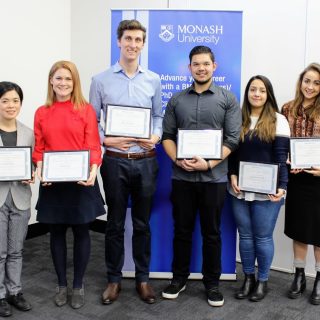
Congratulations to our Three Minute Thesis Competition final winners
Congratulations to our PhD students who presented their exceptional research at this year’s Hudson Institute/SCS Three Minute Thesis (3MT) competition final on Wednesday, 4 July. The Three Minute Thesis (3MT™) is a national research communication competition that celebrates exciting research conducted by PhD research students. Students have three minutes to present a compelling oration on… Read more
-

Sparking the skills to take research to industry
PhD student, Anqi Li has been selected to take part in the prestigious SPARK Biomedical Innovation and Entrepreneurship training course in Berlin, Germany this month. The two-week intensive course aims to bridge the gap between industry and academia by helping PhD students to think in creative, innovative and entrepreneurial ways. It is part of the… Read more
-

New gene discovery unlocks mysteries of our immunity
A new gene that plays a critical role in regulating the body’s immune response to infection and disease has been identified. The discovery could lead to the development of new treatments for influenza, arthritis and even cancer. Dr Rebecca Ambrose, now a Hudson Institute postdoctoral scientist, was part of the CSIRO team that discovered the… Read more
Hudson News
Get the inside view on discoveries and patient stories