Story type: Discovery
-
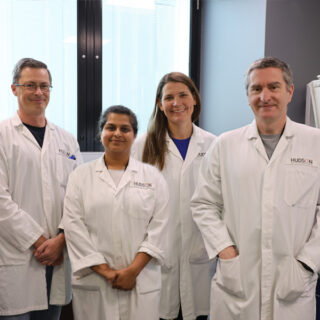
One-two punch targets childhood brain cancer
The latest discovery packs a double punch – identifying a genetic target for childhood brain cancer, plus a way to determine which patients are mostly likely to benefit from it.… Read more
-
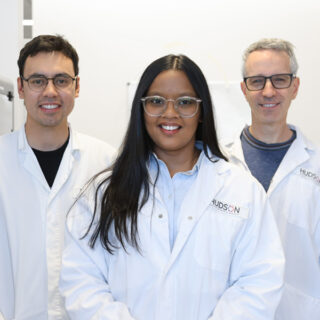
Extracellular vesicles: A promising frontier in treating preterm brain injury
Despite advances in neonatal care, effective treatments for brain injury in premature babies remain a significant unmet need. Researchers at Hudson Institute of Medical Research, working with the School of Clinical Sciences at Monash Health, are tackling this challenge head-on with an innovative approach: engineered extracellular vesicles.… Read more

-
Leader cells key to stopping ovarian cancer’s double impact
A diagnosis of ovarian cancer carries a dual threat – the disease itself and the danger of the cancer spreading – but the latest research from Hudson Institute has uncovered a crucial factor, leader cells, that are crucial to both.… Read more
-
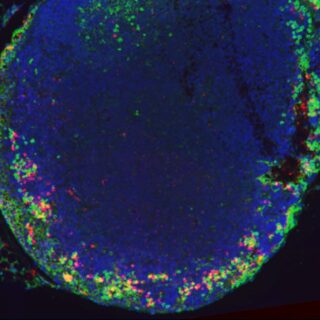
Creatine & pregnancy – good for baby’s brain
There is growing evidence that creatine may be beneficial as a pregnancy supplement, and new research from Hudson Institute suggests it could have benefits in protecting the brain when a baby is starved of oxygen.… Read more

-
AI-based fetal monitoring to prevent perinatal brain injury
A new AI-driven approach to fetal brain health monitoring will enable early detection of fetal distress, allowing for timely interventions to prevent brain damage and reducing unnecessary medical interventions, thanks to Monash Institute of Medical Engineering (MIME) project grant support.… Read more
-
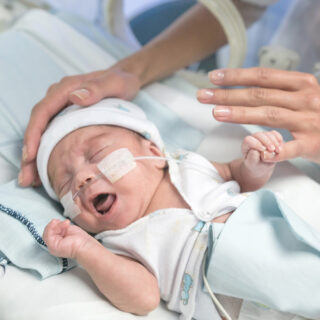
Next-generation degradable 3D meshes to repair POP
A debilitating condition affecting one in four women is desperately crying out for a solution, and the next generation of treatments to repair the damage of pelvic organ prolapse (POP) has just come a big step closer.… Read more
-
Genetic analysis CAPS search for a cure
A rare and debilitating group of autoinflammatory diseases is closer to a cure thanks to a world first genetic analysis project at Hudson Institute.… Read more
-
Too much of a good thing: fine-tuning newborn resuscitation
Latest research at Hudson found that a simple change in how oxygen therapy is given can help protect the babies brain during newborn resuscitation.… Read more
-
Stem Cells: Hope on the horizon for preterm babies
Pioneering Australian research, undertaken by a collaboration of Monash Health’s Monash Children’s Hospital, The School of Clinical Sciences at Monash University, and Hudson Institute of Medical Research, has successfully demonstrated the feasibility and safety of using a baby’s own cord blood-derived cells as a potential treatment for extremely preterm infants.… Read more
-
Uncovering the cellular secrets of RNA editing
Professor Carl Walkley heads the RNA Biology and Innate Immune Sensing Research Group at Hudson Institute of Medical Research and their latest research, published in Science Immunology, sheds new light on these crucial processes.… Read more