
A scientific silver lining
By Rob Clancy, staff writer. Reviewed by Professor Carl Walkley
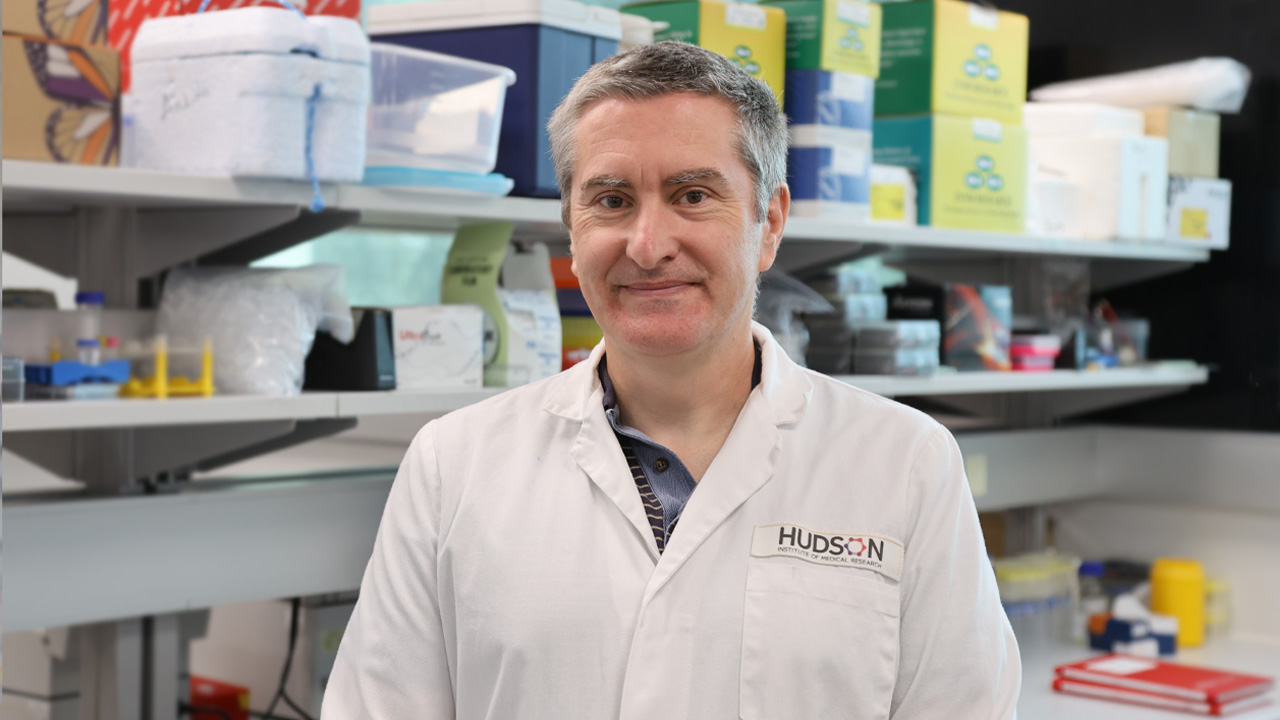
Researchers were aiming to find a genetic solution to a rare and devastating disease but were not able to identify one. However, in the process they identified a crucial factor in one of life’s most essential processes.
Professor Carl Walkley and his team were trying to identify new pathways that could be used to treat Rothmund-Thomson Syndrome (RTS) Type II, a very rare condition which includes low bone mass and immune compromise, as well as a greatly increased rate of cancer, particularly osteosarcoma.
Systematically switching off genes
They used cell lines derived from a mouse model with mutations similar to those identified in RTS patients and systematically blocked every other gene, looking for one which would “make up for” the effects of the mutation that causes RTS. What they found surprised them.
“We found only one gene where we saw a difference, but there was a catch,” Prof Walkley said. “It’s a really accurate result, but the result was purely a product of the fact we’d used mouse cell lines, so it doesn’t end up being applicable to humans with RTS.”
“What that meant was, in this study, we could not find a pathway to target that could potentially have made a difference for RTS patients – however that one pathway we did find actually provided important new information about the way DNA divides and multiplies in every cell in everybody.”
Crucial to cell division
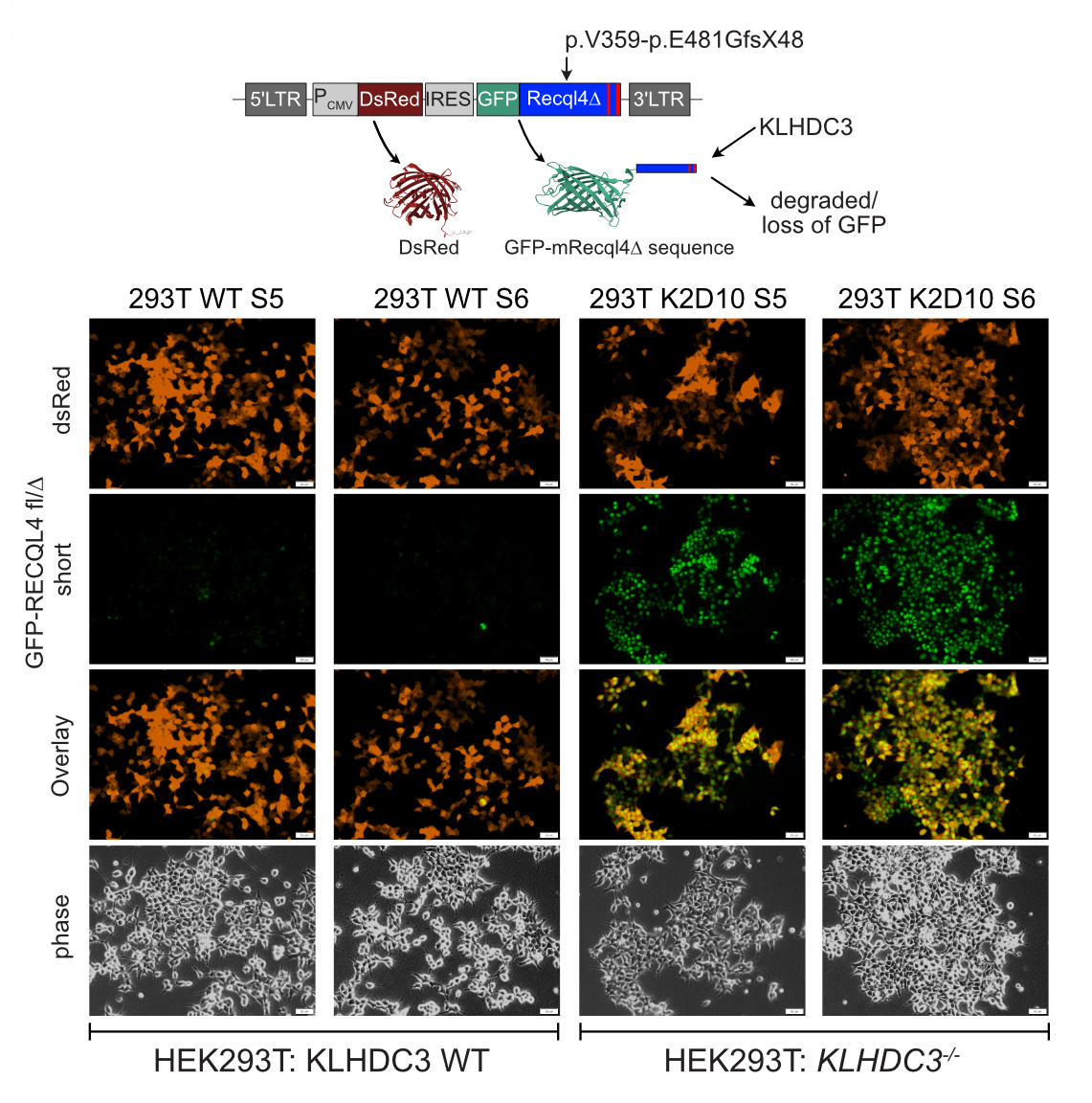
The pathway found relates to a protein called RECQL4. Mutations in this protein are a cause of Rothmund-Thomson Syndrome Type II.
The RECQL4 protein is crucial to the process of DNA replication and cell division – if it is lost completely, this causes cell death. But particular shorter forms of RECQL4 are still functional, so its exact role in the cell, and how it works, is unknown.
In their study, Prof Walkley and the team identified for the first time that just very low levels of a shortened form of the RECQL4 protein will maintain the ability of cells to divide. Their findings demonstrate how these shorter forms of the protein can still work to support DNA replication, and advances our overall understanding of how RECQL4 functions.
“Previous studies had suggested that cell division was possible without RECQL4, but we have now been able to confirm its vital role in this process, even if it’s only there in trace amounts.” he said.
And while this study did not find a pathway to circumvent the effects of RECQL4 mutation in RTS, it does suggest that specific targeting of the disease-causing mutations may be a way forward instead – providing potential future avenues to be explored.
Rothmund-Thomson Syndrome facts
- RTS is characterised by a rash that progresses to poikiloderma; sparse hair, eyelashes, and/or eyebrows; small size; skeletal and dental abnormalities; juvenile cataracts; and an increased risk for cancer, especially osteosarcoma.
- A variety of hematologic abnormalities have been reported in affected individuals.
- The rash of RTS typically develops between ages three and six months (occasionally as late as age two years) as erythema, swelling, and blistering on the face, subsequently spreading to the buttocks and extremities.
- Skeletal abnormalities can include radial ray defects, ulnar defects, absent or hypoplastic patella, and osteopenia.
Collaborators | St Vincent’s Institute of Medical Research (Paula Armina V Buco, Wilson Castillo-Tandazo, Alistair M Chalk, Courtney Pilcher, Jessica K Holien, Jörg Heierhorst, Monique F Smeets) • Murdoch Children’s Research Institute (Tiong Y Tan) • Roswell Park Comprehensive Cancer Center (Amnon Koren)
Journal | EMBO Reports
Title | Minute amounts of helicase-deficient truncated RECQL4 are sufficient for DNA replication
View publication | https://link.springer.com/article/10.1038/s44319-026-00727-2
In this article

About Hudson Institute
Hudson Institute’ s research programs deliver in three areas of medical need – inflammation, cancer, women’s and newborn health. More
Hudson News
Get the inside view on discoveries and patient stories
“Thank you Hudson Institute researchers. Your work brings such hope to all women with ovarian cancer knowing that potentially women in the future won't have to go through what we have!”