
Flu and you – what you need to know in 2026

Australia experienced a record-breaking influenza season in 2025, with the highest number of cases ever recorded nationally and vaccination rates falling to concerning levels. Health experts warn that this combination may set the stage for another severe flu season in 2026 unless more Australians take steps to protect themselves and their communities.
With the 2026 flu season already here, understanding who is most at risk, how vaccination works, and what steps you can take to protect yourself may help reduce its impact.
Key Facts
- Australia is entering the 2026 flu season early after a record-breaking year in 2025.
- Vaccination remains the most effective way to reduce the risk of severe illness.
- Simple hygiene measures can also help limit the spread of infection.
- Contact your GP for advice or if you have concern about flu.
What is influenza?
Influenza is caused by a group of viruses that infect the respiratory system, including the nose, throat and lungs. It spreads easily when an infected person coughs, sneezes or talks. It can also spread by contact with contaminated surfaces (such as door handles or phones), followed by touching your face. Because of this, flu can move quickly through households, workplaces, schools, and aged care settings.
New “Super-K” strain
In Australia, influenza circulates throughout the year, though activity is typically higher during the colder months. Because the virus changes over time, people can be infected more than once in their lifetime.
A new dominant strain of flu called “Super-K” (a subtype of Influenza A H3N2) emerged in 2025, extending the Australian flu season from May to November and causing unusually high rates of flu in our summer.
But while this variant looks to be easier to catch, leading to an increase in infection numbers overall, there is nothing so far to suggest it causes more severe disease.
How to reduce your risk of catching or spreading the flu
Influenza is contagious from about a day before symptoms appear and for several days afterwards. You can reduce the risk of infection by
- Getting a flu vaccine each year
- Washing your hands regularly with soap and water
- Avoiding touching your eyes, nose and mouth
- Covering coughs and sneezes with a tissue or your elbow
- Cleaning frequently touched surfaces
- Staying home if you are unwell
Who is most at risk from flu?
While anyone can catch influenza, some groups are more vulnerable to severe illness and complications. These include
- Adults aged 65 and over
- Children under five
- Pregnant people
- People with serious medical conditions
- Aboriginal and Torres Strait Islander peoples
Research has consistently shown that vaccination reduces the likelihood of serious outcomes, even if infection occurs.
Annual flu vaccination is recommended for everyone aged six months and over. It is free for people in some higher-risk groups. Even if you’re not in a priority group, vaccination helps protect those around you and limits community spread.
Will the 2026 flu vaccine help?
No two flu seasons are the same. Influenza viruses can evolve rapidly, so protection from vaccination or a previous infection does not last indefinitely. In addition, immunity from vaccination decreases over time. This is why yearly vaccination is recommended for the best protection.
Flu vaccines are updated regularly to match the influenza viruses most likely to be circulating. The vaccine this year has been adjusted to include protection against the “Super-K” strain.
When is the best time to get vaccinated?
Vaccines work by training your immune system to recognise and respond to the virus, reducing the risk of severe illness, hospitalisation, and complications.
It takes around two to four weeks after vaccination for your body to build immunity. Protection is strongest in the first few months and gradually decreases over time.
For this reason, vaccination ahead of the period when influenza is most common is recommended. In Australia, this period is usually from June to September, which makes the optimum time to get vaccinated around April or May – but anytime during the flu season is a good time to receive the vaccine if you haven’t had it yet.
What are flu symptoms?
Influenza often begins like a cold but quickly becomes more severe. Common symptoms include sudden fever and chills, headache, muscle and joint aches, cough and sore throat, shortness of breath, fatigue and weakness. Children may also experience vomiting or diarrhoea.
Symptoms are usually worst in the first few days but can last up to a week or longer, with fatigue sometimes lingering for weeks.
Most people will recover from the flu, but you should always seek trusted medical help if
- You are in an at-risk group, as complications are more likely
- Your symptoms don’t improve, change or get worse
- You’re concerned about your symptoms, or those of someone you are caring for.
Flu complications
While many people recover without medical treatment, influenza can lead to serious complications. One of the most common is a secondary bacterial infection, which can develop into pneumonia. Signs of complications may include:
- Difficulty breathing
- Chest pain
- Persistent or worsening fever
- Severe or lasting cough
If these symptoms occur, medical care should be sought promptly.
Why can influenza be serious?
In some cases, the body’s immune response to influenza can cause significant inflammation in the lungs and airways. This can impair breathing and increase the risk of complications, particularly in vulnerable groups.
However, research at Hudson Institute is looking to change this. Researchers are working to better understand how influenza affects the body and to develop new treatments that can reduce complications.
Protection against severe flu and complications
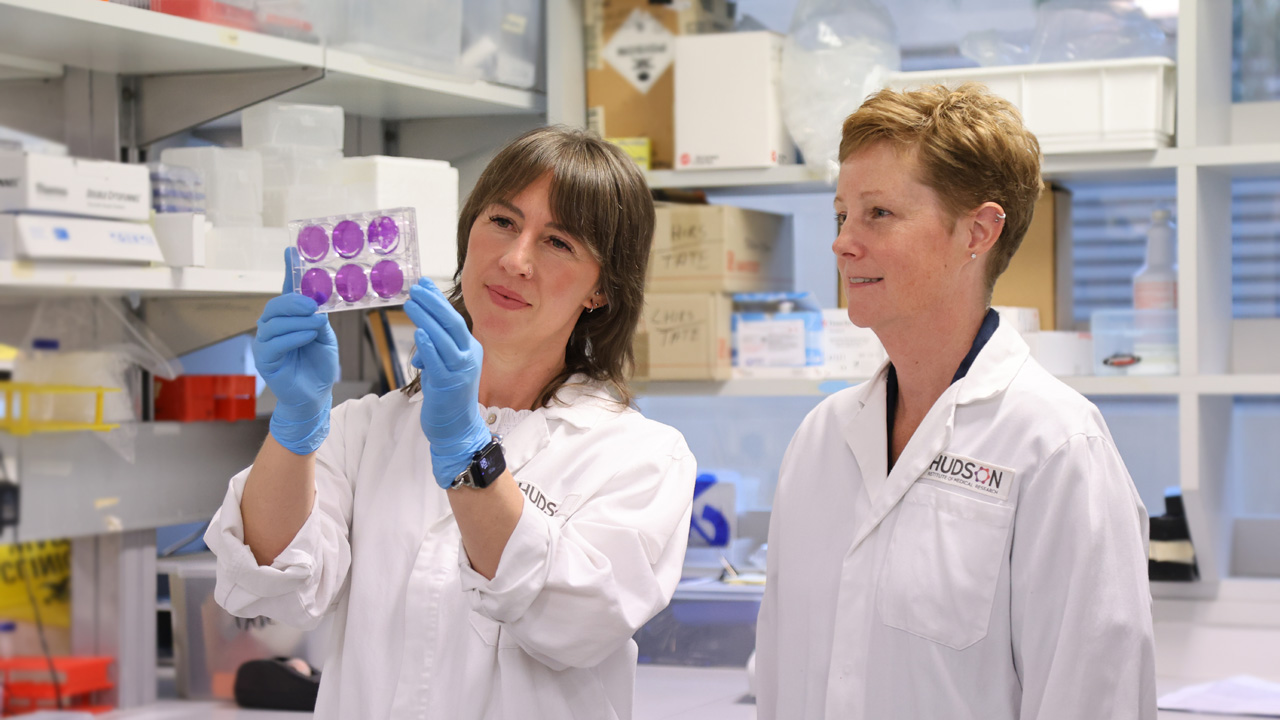 A new treatment could drastically reduce one of flu’s deadliest complications by helping the lungs defend themselves.
Dr Alison West and Associate Professor Michelle Tate’s latest research published in Mucosal Immunology, has shown that a synthetic peptide called LAT9997, delivered directly into the airway, can protect against both severe flu and the secondary bacterial infections that frequently follow it — often with fatal consequences.
Future proofing
The goal of our research is to reduce the impact of future influenza seasons. Influenza Infections occur every year, posing a real threat to people’s health and placing pressure on our healthcare system.
Annual vaccination remains the most effective protection against severe influenza. After a challenging 2025 season, increasing awareness and vaccination coverage in 2026 will be essential to limiting the impact of flu across Australia.

In this article
- Key Facts
- What is influenza?
- New “Super-K” strain
- How to reduce your risk of catching or spreading the flu
- Who is most at risk from flu?
- Will the 2026 flu vaccine help?
- When is the best time to get vaccinated?
- What are flu symptoms?
- Flu complications
- Why can influenza be serious?
- Protection against severe flu and complications
- Future proofing

About Hudson Institute
Hudson Institute’ s research programs deliver in three areas of medical need – inflammation, cancer, women’s and newborn health. More

Hudson News
Get the inside view on discoveries and patient stories
“Thank you Hudson Institute researchers. Your work brings such hope to all women with ovarian cancer knowing that potentially women in the future won't have to go through what we have!”
