
Hudson News Winter 2026: Director’s message
By Rob Clancy, staff writer

Across our laboratories at Hudson Institute, new ideas are taking shape and breakthroughs are within reach. Our discoveries, and your generosity, are creating real momentum for families facing some of the most challenging health conditions, including inflammatory bowel disease (IBD).
In this edition of Hudson News, you’ll meet two children whose lives have been profoundly affected by IBD. Their stories remind us why research is paramount to patients and families faced with the burden of these debilitating conditions.
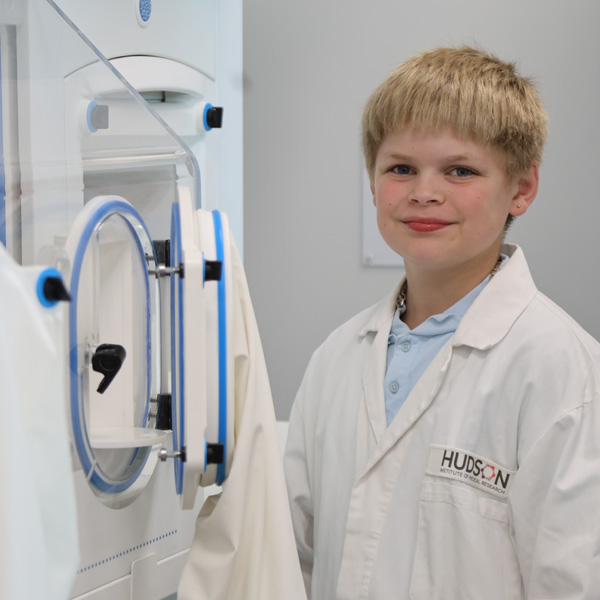
Noah is just eleven years old, but he has already spent more time with doctors and hospitals than most of us will in a lifetime. He says the pain of IBD is “10 times worse than a bone breaking”.
His smile hides the profound impact that living with IBD has on anyone, let alone someone so young. So far, the best he can hope for is to have the condition contained, but he, and our researchers, are aiming for something better.
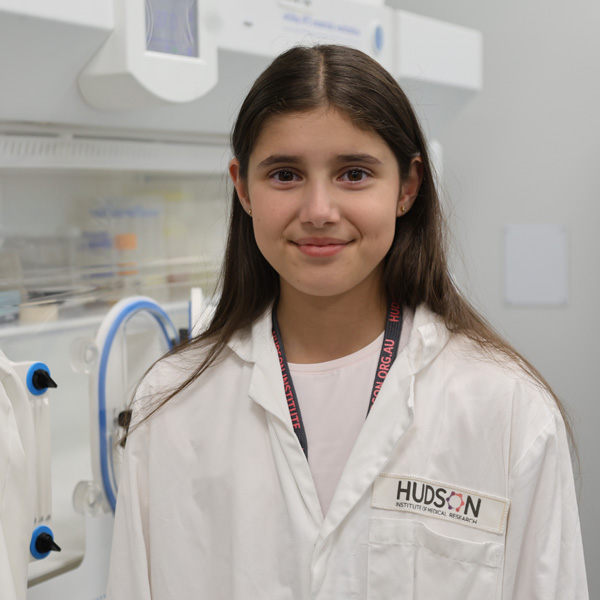
Charlotte is a little older – just entering her teens – but her life has been anything but carefree since IBD struck her at the age of 9. Some nights she would need to go to the toilet up to 20 times, with her parents unsure if she should ride it out or head to hospital. From weight loss to internal bleeding and worse, IBD has been a life-changing illness.
Cutting-edge research happening at Hudson Institute offers hope for more patients like Noah and Charlotte affected by IBD. Professor Sam Forster, a world leader in microbiome research, and his team continue to investigate the complex ecosystem within the gut that plays such a powerful role in exacerbating the symptoms of IBD and potentially curing it.
In partnership with Dr Ed Giles, who is also a paediatric gastroenterologist at Monash Children’s Hospital, Prof Forster and his team aim to build off previous discoveries to develop new therapeutic approaches for IBD that will target particular species of bacteria and could one day transform treatment for IBD patients.
Our researchers are also making important strides in childhood cancer. Through our open‑source Children’s Cancer Model Atlas (CCMA), we’re sharing vital “big data” with scientists around the world to accelerate the discovery of new therapies and biomarkers. And with support from My Room Children’s Cancer Charity, our Living Biobank is helping overcome the shortage of accurate preclinical models by maintaining a diverse, renewable collection of patient‑derived samples — a resource that brings us closer to breakthroughs for children who urgently need them.
These milestones in microbiome science, childhood cancer research and beyond reflect our commitment to advancing knowledge and translating it into better outcomes for people at every stage of life.
Your support is central to this progress. At a time when medical research funding has never been harder to come by, I invite you to continue supporting our vital work with a donation this end of financial year. Your gift is their breakthrough.
With warm regards,
Professor Elizabeth Hartland AM
Director and CEO
Stay up to date with by subscribing to Hudson News list.


In this article

About Hudson Institute
Hudson Institute’ s research programs deliver in three areas of medical need – inflammation, cancer, women’s and newborn health. More

Hudson News
Get the inside view on discoveries and patient stories
“Thank you Hudson Institute researchers. Your work brings such hope to all women with ovarian cancer knowing that potentially women in the future won't have to go through what we have!”
