
Mysteries of the microbiome’s potential link to autism
By Rob Clancy, staff writer. Reviewed by Professor Samuel Forster

As understanding of the gut microbiome continues to grow, attention is turning to its potential impact on brain development, with major research investment being devoted to better assess the role of the maternal and developing infant gut microbiomes in healthy infant neurodevelopment.
Hudson Institute of Medical Research’s Professor Sam Forster is a world leader in microbiome research and he’s among a select handful to receive an award under Wellcome Leap’s Foundations of a Resilient Microbiome (FORM) program.
The human gut microbiome is essential for health, influencing nutrition, metabolism, immune function and more, so this project aims to explore possible links to the rise in neurodevelopmental challenges — including autism spectrum disorder (ASD).
In its own words, Wellcome Leap builds bold, unconventional programs, and funds them at scale. Programs are optimised to deliver breakthroughs in human health over 5 – 10 years and demonstrate seemingly impossible results on seemingly impossible timelines.
It is an opportunity that excites Prof Forster.
Exciting opportunity to study potential links between autism and the microbiome
“The Wellcome Leap FORM program is an ambitious global initiative to deepen our understanding of the factors shaping early neurodevelopment and improve support options for families. We are excited to contribute our microbiome expertise and novel technologies to help reveal how early‑life biology influences developmental trajectories,” he said.
Early-life pressures significantly affect the infant gut microbiome’s development, while maternal factors, including obesity and infections, also impact both maternal and infant microbiomes.
“For example, we’re learning that vaginal and caesarean births are associated with distinct early‑life microbiomes. These differences matter, and they show how much more we still have to understand about early‑life biology and potential impacts on neurodevelopment,” Prof Forster said.
Five-fold autism increase
“This is an important concept to examine, considering that ASD prevalence has increased significantly, with a 5-fold rise in diagnoses in the US since the early 2000s, and the fact that more than 70 per cent of children with severe ASD presentations also experience gastrointestinal issues, indicating a link between gut health and neurodevelopment.”
This project will adopt a new approach, as current studies often focus on correlations rather than causation, and existing microbiome assessments primarily catalog bacterial presence rather than functional health.
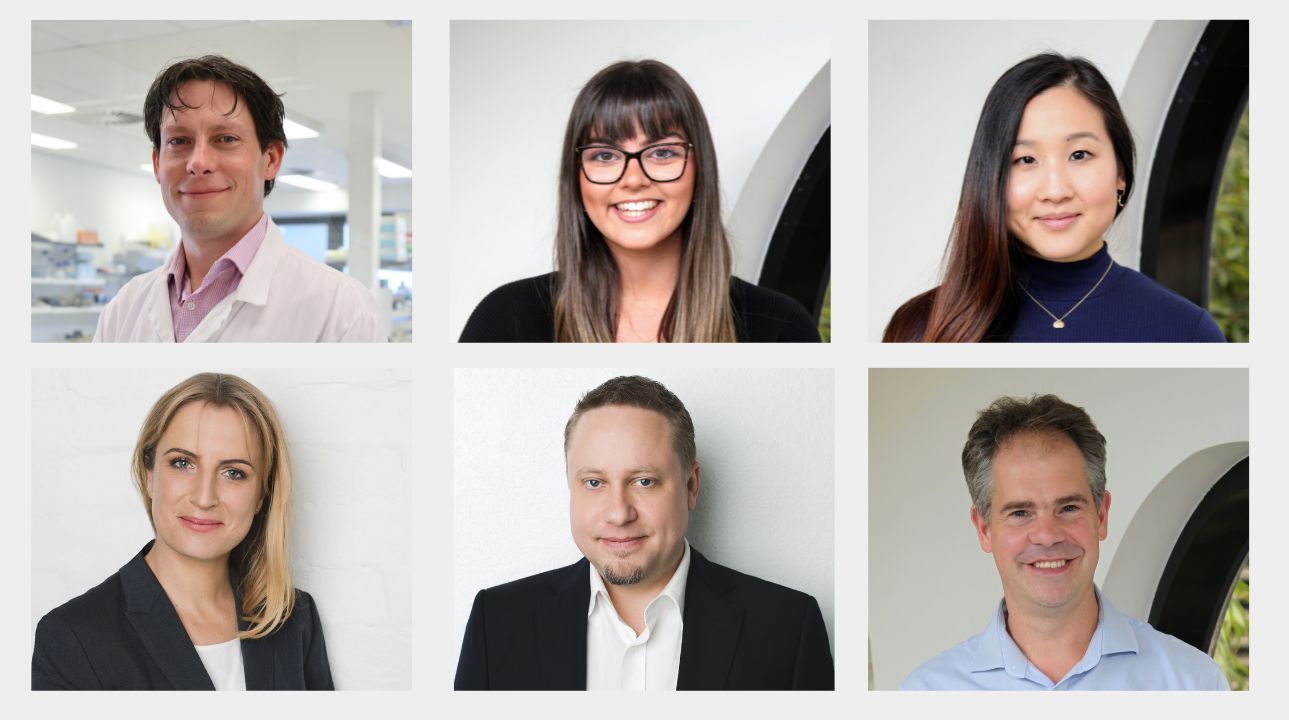
Prof Forster will lead a team at Hudson Institute, including Dr Sara Di Simone, Dr Michelle Chonwerawong, Professor Claudia Nold, Professor Marcel Nold and Dr Ed Giles.
About the Mircobiome
- The gastrointestinal microbiota play an essential, though poorly understood, role in many aspects of human biology
- Emerging evidence suggests the bacterial community structure can impact things as diverse as autoimmune diseases, cancers, infections and neurodevelopment.
- Despite this importance, we are only beginning to grow these bacteria in the laboratory and genome sequence them, let alone characterise their interactions with the human body.
About Wellcome Leap’s FORM program
Today, there is much scientific debate about results suggesting a link between the early-life microbiome and neurodevelopmental challenges, including autism. There is, however, little debate that more research is needed.
FORM, is focused on research to better assess the role of the maternal and developing infant gut microbiome in healthy infant neurodevelopment. Critically, FORM seeks to identify whether an accumulating set of early-life pressures to the developing gut microbiome could be one contributing factor to the rise in neurodevelopmental challenges — including, autism spectrum disorder (ASD).
And further, whether resilience to functional disruption can be measured and supported in key developmental windows and increase options for support as a pathway towards reducing the likelihood of children experiencing severe autism-related difficulties that impact their daily life.
The FORM program does not seek to prevent all forms of autism or to erase autistic identity — only to provide improved understanding and support.
AI-powered microbiome models for personalized therapeutic design
Tinuviel Therapeutics and Hudson Institute of Medical Research are partnering through Wellcome Leap’s FORM program to bridge world-class experimental microbiome science with advanced computational biology. By combining Hudson’s expertise in microbial culturing, systems biology, and translational microbiome research with Tinuviel’s capabilities in artificial intelligence and digital-twin modeling, the collaboration is creating a closed-loop experimental-computational platform to measure, model, and predict human microbiome resilience, opening new pathways for precision diagnostics, predictive medicine, and therapeutic design. Read more
This research was supported by | Wellcome Leap's FORM program

In this article
-
 Professor Samuel Forster
Microbiota and Systems Biology - Associate Professor Edward Giles
Regulation of Interferon and Innate Signalling -
 Dr Sara Di Simone
Interventional Immunology in Early Life Diseases - Dr Michelle Chonwerawong
Microbiota and Systems Biology - Professor Marcel Nold
Interventional Immunology in Early Life Diseases - Professor Claudia Nold
Interventional Immunology in Early Life Diseases
About Hudson Institute
Hudson Institute’ s research programs deliver in three areas of medical need – inflammation, cancer, women’s and newborn health. More

Hudson News
Get the inside view on discoveries and patient stories
“Thank you Hudson Institute researchers. Your work brings such hope to all women with ovarian cancer knowing that potentially women in the future won't have to go through what we have!”
